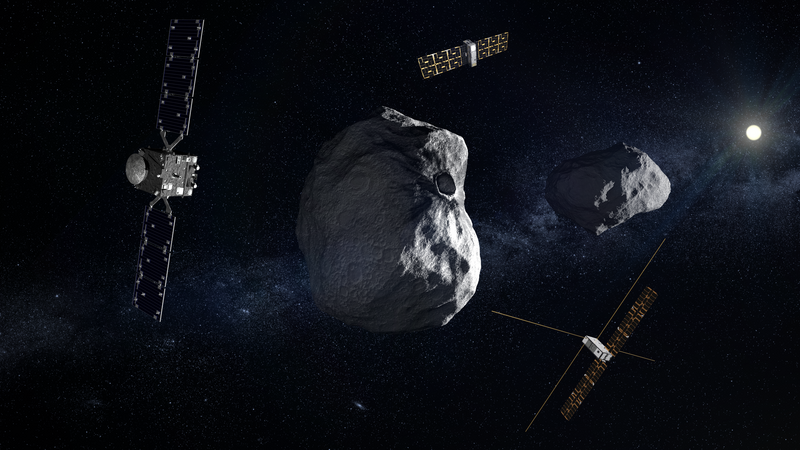
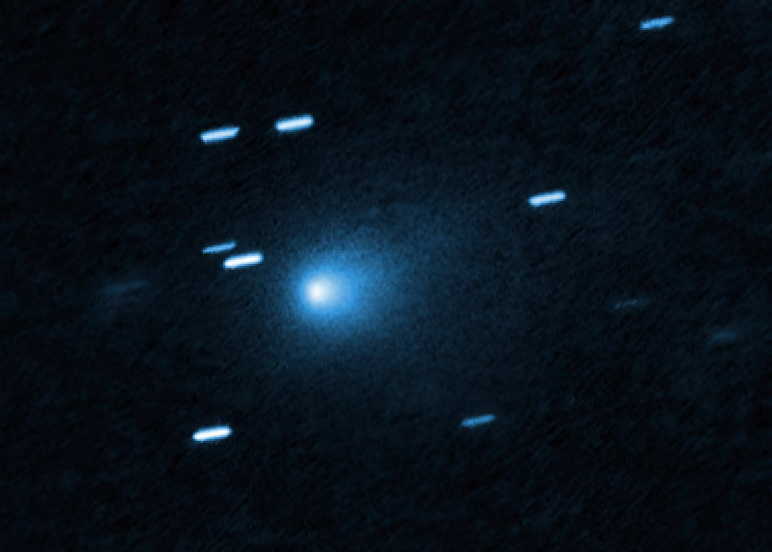
The object 3I/ATLAS is the third interstellar visitor detected in our Solar System, after 1I/ʻOumuamua (2017) and 2I/Borisov (2019). It was discovered in 2024 by the ATLAS telescope (Asteroid Terrestrial-impact Last Alert System) in Hawaii, which gave the object its name.
It is classified as an interstellar comet, an icy body that comes from beyond our Solar System and, when approaching the Sun, develops a characteristic coma and tail. Studying it is key to comparing the composition and evolution of comets formed around other stars with those that originated in our own Oort Cloud.
The University of Alicante (UA) and the Institute of Cosmos Sciences of the University of Barcelona (ICCUB) have contributed to the first international scientific article dedicated to 3I/ATLAS, providing observations and analyses that help uncover the nature of this interstellar visitor.
This discovery highlights the importance of international collaboration in modern astronomy and opens a new window into the study of planetary formation processes in other stellar systems.
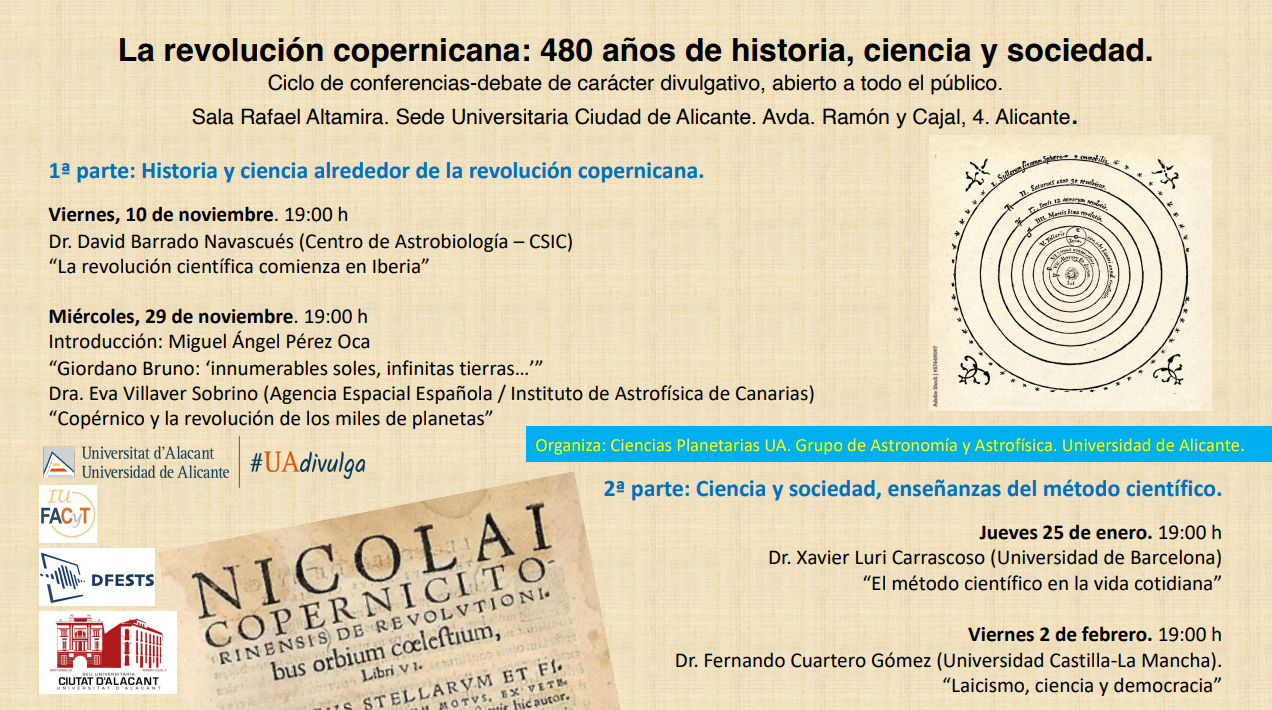 Coinciding with the 480th anniversary of the publication of De revolutionibus orbium coelestium (On the revolutions of the celestial orbs) by Nicolás Copernicus, the University of Alicante (UA) presents the lecture series The Copernican revolution: 480 years of history, science and society . With this work, the polish astronomer began a time of questioning medieval thought installed in European culture with his heliocentric theory, where the revolves in orbit around the Sun.