“Si he logrado ver más lejos es porque he subido a hombros de gigantes” escribió Isaac Newton a su rival Robert Hooke en 1676. Doscientos cincuenta años después, durante una de las visitas que Albert Einstein realizó a Cambridge (Inglaterra), alguien le señaló que él había llegado tan lejos porque se había subido a hombros de Newton.
Einstein le replicó tajante:
Eso no es cierto, estoy subido a hombros de Maxwell

Esta contribución, y a pesar de que comienza con Albert Einstein, que éste será citado en más de una ocasión a lo largo de la misma y que además finalizará con él, está dedicada a James Clerk Maxwell (1831-1879), sobre cuyos hombros Einstein se subió para llegar tan lejos. Hace 150 años Maxwell publicó el artículo titulado A Dynamical Theory of the Electromagnetic Field (Una teoría dinámica del campo electromagnético), del que previamente había enviado un breve resumen del mismo a la Royal Society el 27 de octubre de 1864. Una primera versión del trabajo fue leída por Maxwell ante esta sociedad el 8 de diciembre de ese año, evidentemente ni con la extensión ni con el contenido que luego tendría el artículo definitivo. Una vez Maxwell concluyó el artículo, lo remitió el 23 de marzo de 1865 a George Stokes, Secretario de Ciencias Físicas de la Royal Society, y tras varias revisiones fue aceptado el 15 de junio de 1865 para su publicación en Philosophical Transactions of the Royal Society y enviado el 16 de junio de 1865 a la imprenta de Taylor & Francis. Este artículo se ha convertido por méritos propios en uno de los más importante de la historia de la física al contener las ecuaciones del campo electromagnético (conocidas como “ecuaciones de Maxwell”) y la teoría electromagnética de la luz. Pero eso no era todo, en una de las hazañas más grandes del pensamiento humano, Maxwell predijo la existencia de las ondas electromagnéticas propagándose a la velocidad de la luz y además concluyó que la luz era una onda electromagnética. En el propio artículo Maxwell con la modestia que le caracterizaba afirmaba:
“… parece que tenemos razones de peso para concluir que la propia luz (incluyendo el calor radiante y otras radiaciones si las hay) es una perturbación electromagnética en forma de ondas que se propagan según las leyes del electromagnetismo.”
No estaba equivocado.
Este año 2015 se cumple, por tanto, el 150 aniversario de la teoría electromagnética de la luz y éste es uno de los acontecimientos que se conmemoran en el Año internacional de la luz y de las tecnologías basadas en la luz, junto con otros hitos importantes en la ciencia de la luz como son la publicación del Libro de la Óptica del matemático y astrónomo árabe Ibn Al-Haytham o Alhazen (965-1040) hacia 1015, las contribuciones a la teoría ondulatoria de la luz publicadas por Augustin-Jean Fresnel (1788-1827) en 1815, la teoría de del efecto fotoeléctrico de 1905 y el centenario de la incorporación de la luz en la cosmología mediante la relatividad general en 1915, ambas de Albert Einstein (1879-1955), el descubrimiento de la radiación cósmica de fondo de microondas del cosmos por Arno Penzias y Robert Wilson, ese eco del origen del Universo y una prueba del Big Bang, y los logros de Charles Kuen Kao en la transmisión de luz por fibras ópticas para comunicaciones, los dos de 1965. Es importante señalar que Einstein, Penzias, Wilson y Kao fueron galardonados con el Premio Nobel de Física precisamente por sus aportaciones a la ciencia de la luz.
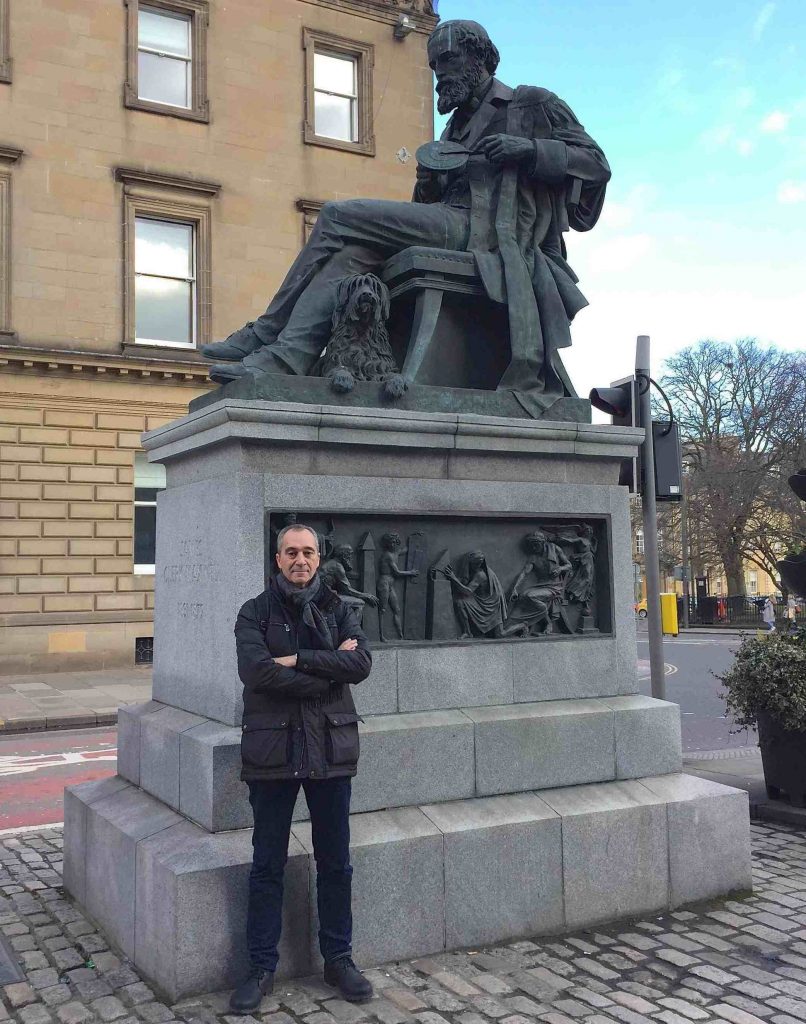
Estatua de James Clerk Maxwell en Edimburgo en la que puede verse sujetando uno de sus discos de color y acompañado de su perro Toby / Créditos: A. Beléndez
James Clerk Maxwell
James Clerk Maxwell es uno de los científicos más importantes de la historia de la ciencia. José Manuel Sánchez Ron, catedrático de Historia de la Ciencia y académico de la lengua, en la nota preliminar de su edición y traducción del libro de Maxwell Materia y Movimiento señala que no es posible comprender el siglo XIX ⎯una centuria esencial para nosotros⎯ sin tener en cuenta a figuras como Darwin, Lyell, Pasteur o Faraday, pero mucho menos aún sin recordar a Maxwell, que nos dejó la teoría del campo electromagnético, una de las creaciones científicas más originales e importantes que se han hecho jamás. Maxwell es además uno de los grandes de la historia de la física, junto con Newton y Einstein, quizás los dos únicos que le precederían si se hiciera una escala de excelencia científica.
Maxwell nació el 13 de junio de 1831 en Edimburgo en el seno de una familia acomodada. Su vida transcurrió durante la consolidación de la revolución industrial en Gran Bretaña, en la era victoriana, en pleno auge del Imperio Británico. Antes de seguir me gustaría hacer un breve inciso. Al leer James Clerk Maxwell probablemente pensamos que su nombre es compuesto, James Clerk, y su apellido es Maxwell. Sin embargo, realmente su primer apellido no era Maxwell, sino Clerk y además el apellido de su madre era Cay. Lo que sucede es que su bisabuelo George Clerk se casó con una prima suya, Dorothea, cuya madre se llamaba Agnes Maxwell, y al heredar las fincas de la familia Maxwell, y por temas legales, añadió Maxwell a su primer apellido Clerk, quedando su apellido desde entonces como Clerk Maxwell. En conclusión, resulta que las ecuaciones del electromagnetismo llevan el nombre del primer apellido de una tatarabuela de Maxwell.
Su padre, John Clerk, era abogado de formación, pero estaba muy interesado en la tecnología y es a su madre, Frances Cay, a la que debe sus primeras enseñanzas hasta sus ocho años de edad, momento en el que ella fallece a causa del cáncer. Tras tres años más recibiendo educación privada en la finca familiar de Glenlair, con 11 años fue enviado a la Academia de Edimburgo. Cuando en tercer curso empezaron las lecciones de matemáticas, Maxwell pronto asombró a todos por su gran maestría con la geometría. En esa época también empezó a escribir versos de cualquier tema y además con impecable ritmo y métrica. Maxwell siguió escribiendo poemas hasta su muerte e incluso llegó a plantear problemas de física en verso. En 1847 entró en la Universidad de Edimburgo en la que fue autorizado a utilizar algunos aparatos de laboratorio en sus horas libres. En 1846, y con tan solo 15 años, Maxwell presenta su primer trabajo científico en 1846, Sobre la descripción de los óvalos y las curvas con multiplicidad de focos en la Royal Society de Edimburgo que fue leído por su profesor y tutor James Forbes porque “no se consideraba propio que un muchacho en blusa subiera a la tribuna”.
Maxwell fue gran amigo de los también físicos William Thomson (1824-1907), posteriormente Lord Kelvin, y Peter Tait (1831-1901). Maxwell y Tait se hicieron amigos en la Academia de Edimburgo cuando eran unos adolescentes. Los tres mantuvieron frecuentes intercambios epistolares sobre sus investigaciones. Thomson y Tait firmaban a veces sus cartas como T y T’ y Maxwell como dp/dt, pues en uno de los libros de Tait una expresión de la segunda ley de la termodinámica era dp/dt = JCM, precisamente las iniciales de James Clerk Maxwell. Tenían otros muchos códigos, como H para William Hamilton (1788-1856), profesor de Maxwell y Tait en Edimburgo (y que no debe confundirse con físico y matemático irlandés Willian Rowan Hamilton), o H2 para el físico alemán Hermann Helmholtz (1821-1894). Otro símbolo que utilizaban a menudo en sus cartas era T» para referirse al físico irlandés John Tyndall (1820-1893). Tait, que despreciaba a Tyndall, explicó que T” realmente designaba una “cantidad de segundo orden”, alguien insignificante. En la siguiente imagen podemos ver los primeros versos del poema A Lecture of Thomson’s Galvanometer escrito por Maxwell el 16 de mayo de 1872 y que firma como dp/dt.
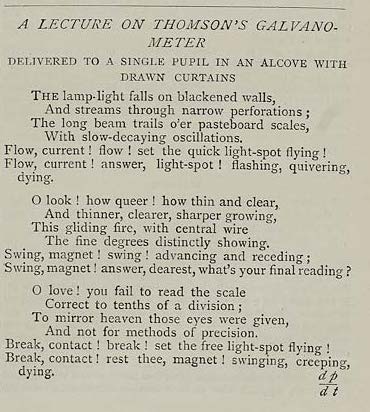
Poema de Maxwell que firma como dp/dt / Créditos: National Library of Scotland
.
Tras estudiar tres cursos de una carrera de cuatro, dejó Edimburgo para marchar a la Universidad de Cambridge, el centro más influyente de la Física en aquella época. En Cambridge Maxwell fue admitido en el Trinity College, uno de los más prestigiosos. Para los estudiantes con inclinaciones científicas y gran habilidad con las matemáticas, la Universidad de Cambridge poseía el atractivo de un sistema de exámenes muy duro introducido en 1730 y conocido desde 1824 como Tripos Matemático. Se llamaba Tripos por el taburete de tres patas en el que originariamente se sentaban los estudiantes para examinarse. Los exámenes del Tripos tenían lugar en enero, tras tres años y un trimestre de formación, en un majestuoso edificio barroco con grandes ventanales y sin calefacción conocido como la casa del senado. Podemos imaginar el frío y la humedad que pasarían los examinandos. En el Tripos predominaban las preguntas de matemática aplicada y física teórica. En 1854, año en el que se examinó Maxwell del Tripos, éste consistió en 16 exámenes distribuidos en 8 días, con una duración de 44 horas y media y un total de 211 preguntas. Los problemas que se planteaban no eran desde luego nada triviales y en ocasiones los profesores proponían problemas que no siempre sabían resolver a la espera de que algún alumno brillante lo consiguiera. El estudiante que obtenía la mayor calificación en el Tripos era el senior wrangler, el segundo second wrangler y así sucesivamente. Llegar a senior wrangler era un honor nacional. Sin embargo, y a pesar de su gran capacidad para la física y las matemáticas, Maxwell no consiguió el primer puesto del Tripos cuando se examinó en 1854, sino que fue second wrangler, detrás de Edward Routh (1831-1907). Los mejores wranglers del Tripos de cada año se examinaban de nuevo en el mes de febrero para optar al Premio Smith. Esta vez los puestos se intercambiaron, en la convocatoria del Premio Smith de 1854 fue primero James Clerk Maxwell y segundo Edward Routh. El examen de ese año lo puso Georges Stokes que ya ocupaba por aquel entonces la Cátedra Lucasiana de Matemáticas de la Universidad de Cambridge (cátedra que, por cierto, también han ocupado Isaac Newton, Paul Dirac y Stephen Hawking, entre otros). La pregunta Nº 8 del examen era la demostración del Teorema de Stokes. También se preguntaba la explicación de diversas formas de determinar la masa de la Luna.
En la Universidad de Cambridge tan prestigioso como ganar en el Tripos, era alzarse con el Premio Adams. Este Premio, que todavía hoy existe, se creó en 1848 y debe su nombre al astrónomo John Couch Adams (1819-1892) que predijo la existencia del planeta Neptuno basándose sólo en cálculos matemáticos. El premio se concede cada dos años al mejor trabajo sobre un tema propuesto por un comité. El del año 1857 tenía por título El movimiento de los anillos de Saturno. Maxwell se presentó a dicho premio y tras dos años de trabajo lo ganó en 1859 con el trabajo titulado Sobre la estabilidad del movimiento de los anillos de Saturno en el que demostró matemáticamente que la única estructura que puede explicar dicha estabilidad era que estuviesen constituidos por un enjambre de partículas desconectadas. El trabajo de Maxwell no sólo ganó el Premio Adams sino también el elogio de toda la comunidad científica. George Airy (1801-1892), Astrónomo de la Casa Real Británica, lo calificó como “una aplicación notabilísima de las matemáticas”.
Tras graduarse en Cambridge, e influenciado por su antiguo profesor James Forbes (1809-1868), sus primeras investigaciones fueron sobre temas relacionados con la luz, en particular con la teoría del color. Para llevarlas a cabo utilizó un disco giratorio con sectores de distintos colores, que él mismo iba modificando. Maxwell eligió como colores primarios: rojo, verde y azul e introdujo los triángulos de Maxwell para caracterizar el color situando estos tres colores primarios en los vértices del triángulo. Así funcionan los sistemas RGB de síntesis aditiva de colores, cuyo padre fue Maxwell.
En 1856, y tras pasar un par de años más en Cambridge, Maxwell ganó la cátedra de filosofía natural del Marischal College de Aberdeen en Escocia. Allí contrajo matrimonio en 1858 con Katherine Mary Devar, hija del principal del college. No tuvieron hijos. En 1860 dejó su cátedra de Aberdeen para ocupar otra en el King’s College de Londres, donde estuvo cinco años. En 1860 ganó la Medalla Rumford de la Royal Society «for his researches on the composition of colours, and other optical papers» (por sus investigaciones sobre la composición de los colores, y otros artículos de óptica), por lo que en mayo de 1861 fue invitado a dar una conferencia en esta sociedad para explicar dichos trabajos. En la charla fue el primero en proyectar una fotografía en color, otra de las contribuciones de Maxwell a la ciencia de la luz. Para ello proyectó las imágenes formadas con luces de los tres colores primarios rojo, verde y azul y sobre la pantalla apareció una imagen en color de una cinta de tartán. Tres semanas después es elegido fellow de la Royal Society. Acababa de cumplir 30 años.
En 1865 renunció a su cátedra londinense por voluntad propia para volver a su finca escocesa de Glenlair y estando ya allí, en una carta que escribió en febrero de 1866, señaló:
“Ahora por fin tengo mi tiempo completamente ocupado con experimentos y especulaciones de tipo físico, algo que no podía emprender mientras tenía deberes públicos.”
Parece que hace 150 años los deberes públicos de un profesor universitario no era tan diferentes de los que tenemos hoy en día. En Glenlair escribió su gran obra, publicada en 1873, A Treatise on Electricity and Magnetism (Tratado de Electricidad y Magnetismo), dos volúmenes de más de 500 páginas cada uno y, sin lugar a dudas, texto cumbre de la física del siglo XIX. En su Treatise se unifican todos los fenómenos conocidos hasta el momento sobre electricidad y magnetismo, siendo además un claro producto del modo de hacer ciencia de un alumno del Tripos como prueba su uso de los métodos del análisis matemático y su confianza en el poder de los modelos mecánicos para explicar todos los fenómenos naturales. No en vano, su amigo Lord Kelvin acostumbraba a decir que para saber si se había comprendido un fenómeno había que preguntarse: “¿Podemos hacer un modelo mecánico del mismo?”.
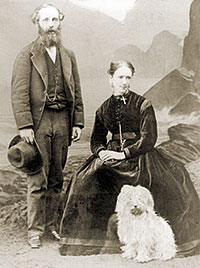
En 1871 Maxwell fue designado para ocupar la recién creada cátedra de Física Experimental de la Universidad de Cambridge y se le dotó de un nuevo laboratorio, el Laboratorio Cavendish, inaugurado en 1874 y construido gracias a la generosidad de William Cavendish (1808-1891), canciller de la Universidad, séptimo duque de Devonshire y descendiente de Henry Cavendish (1731-1810). Maxwell fue el primer director de dicho laboratorio y otros directores que le sucedieron fueron Lord Rayleigh (1842-1919), J. J. Thomson (1856-1940), Ernest Rutherford (1871-1937) o Lawrence Bragg (1890-1971). Desde entonces veintinueve galardonados con el Premio Nobel han trabajado en el Laboratorio Cavendish. Allí se ocupó de supervisar la construcción, adquisición del equipamiento y puesta en marcha del laboratorio y siempre que inspeccionaba como marchaban las obras iba siempre acompañado de su fiel perro Toby.
A principios de 1879 la salud de Maxwell empezó a resentirse por lo que decidió pasar las vacaciones de verano en su finca de Glenlair. Sin embargo, en vez de mejorar, cada vez estaba peor. Aún así, en octubre decidió regresar a Cambridge a pesar de que apenas podía mantenerse en pie y desde luego no podía impartir clase. Maxwell fallecía de cáncer de estómago a los 48 años de edad el 5 de noviembre de 1879, justo el mismo año en el que había nacido Einstein, como si le pasara el testigo. Antes de morir, una de las cosas que más le preocupaba era el futuro de su esposa Katherine, a la que tanto amaba..
La teoría electromagnética de la luz
Maxwell nos dejó contribuciones en teoría del color, óptica, la estructura de los anillos de Saturno, estática, dinámica, sólidos, instrumentación y física estadística. Sin embargo, sin lugar a dudas sus contribuciones más importantes fueron en electromagnetismo. Maxwell llevó a cabo la formulación matemática de las ideas intuitivas de Michael Faraday (1791-1867) sobre los campos eléctricos y magnéticos. Estando todavía en Cambridge en 1856 publica Sobre las líneas de fuerza de Faraday y ya en Londres en 1861 Sobre las líneas físicas de fuerza. En estos artículos proporcionó una explicación matemática sobre los fenómenos eléctricos y magnéticos en función de la distribución de líneas de fuerza en el espacio. Para ello Maxwell creó un complejo modelo mecánico de vórtices moleculares y ruedas intermedias aplicada a los fenómenos eléctricos y magnéticos. Su teoría incluía el éter y estudiaba las interacciones electromagnéticas con toda naturalidad en el marco de un éter omnipresente. Maxwell se mantuvo firme en que la energía electromagnética y el éter no eran entidades hipotéticas, sino reales. De hecho, para los físicos británicos del siglo XIX el éter era tan real como las piedras que formaban el Laboratorio Cavendish y algunos de ellos entendieron que el objetivo principal de la física era desentrañar las propiedades físicas y matemáticas del éter, hasta tal punto que llegaron a pensar que o existía el éter o la física se vendría abajo.
Como se he señalado al principio, hace ahora 150 años y cuando Maxwell acababa de cumplir 34 años, se publica su trabajo titulado Una teoría dinámica del campo electromagnético. Mientras redactaba el artículo y con la modestia que siempre le caracterizó, escribió la víspera del día de Reyes de 1865 una carta a su primo Charles Cay diciéndole:
“… tengo un artículo a flote, con una teoría electromagnética de la luz que, salvo que me convenza de lo contrario, considero de gran valor”
En este artículo Maxwell propuso veinte ecuaciones que denominó “ecuaciones generales del campo electromagnético” y que relacionan veinte variables que rigen el comportamiento de la interacción electromagnética. El artículo consta de 53 páginas y contiene siete partes distintas. Sus veinte ecuaciones generales del campo electromagnético, que expresan y resumen las leyes experimentales del electromagnetismo, proporcionan una base teórica completa para el tratamiento de los fenómenos electromagnéticos clásicos.
No fue hasta 1884 cuando Oliver Heaviside (1850-1925), utilizando el Análisis Vectorial, sintetizó las 20 ecuaciones del campo electromagnético en las cuatro ecuaciones en forma vectorial que conocemos hoy en día: La ley de Gauss del campo eléctrico, la ley de Gauss del campo magnético, la ley de Faraday-Henry de la inducción electromagnética y la ley de Ampére-Maxwell. Desde entonces se conocieron como ecuaciones de Hertz-Heaviside o de Maxwell-Hertz, hasta que Albert Einstein en 1940 popularizó el término Ecuaciones de Maxwell que usamos desde entonces. El físico alemán Ludwig Boltzmann (1844-1906) consideró que estas ecuaciones eran tan bellas por su simplicidad y elegancia que, como el Fausto de Goethe se preguntó:
«War es ein Gott, der diese Zeichen schrieb?»
¿Fue acaso un dios quien escribió estos signos?

Placa con las ecuaciones de Maxwell situada al pie de la estatua de Edimburgo / Créditos: Wikimedia Commons
La sexta parte de su artículo Maxwell la titula teoría electromagnética de la luz y en ella concluye:
“… la luz y el magnetismo son alteraciones de la misma sustancia, y la luz es una perturbación electromagnética que se propaga a través del campo según las leyes del electromagnetismo.”

Maxwell demostró que las ecuaciones del campo electromagnético podían combinarse para dar lugar a una ecuación de onda y propuso la existencia de las ondas electromagnéticas. Al calcular la velocidad de propagación de estas ondas obtuvo el valor de la velocidad de la luz, y concluyó que la luz era una onda electromagnética.
Einstein se refirió en 1940 a ese momento crucial de Maxwell señalando:
“¡Los sentimientos que debió experimentar [Maxwell] al comprobar que las ecuaciones diferenciales que él había formulado indicaban que los campos electromagnéticos se expandían en forma de ondas a la velocidad de la luz! A muy pocos hombres en el mundo les ha sido concedida una experiencia de esa índole.”
Antes de Maxwell, la velocidad de la luz era sólo una velocidad entre muchas.
Después de Maxwell, la velocidad de la luz se convirtió en una privilegiada, señalando el camino a Einstein y la relatividad
En 1888 el físico alemán Heinrich Hertz (1857-1894) produjo ondas electromagnéticas artificialmente en el laboratorio por primera vez lo que suponía la confirmación de la teoría de Maxwell y una victoria sobre los ingenieros telegráficos que negaban la aplicabilidad de la Física de Maxwell a cuestiones de ingeniería práctica. Desgraciadamente Maxwell había fallecido nueve años antes y no pudo ver el éxito de su predicción que es la base, entre otras, de la transmisión de información sin cables, como demostrara por primera vez en diciembre de 1901 el ingeniero italiano y Premio Nobel de Física en 1909, Guglielmo Marconi (1874-1937) al realizar una transmisión mediante ondas electromagnéticas a través del Océano Atlántico entre Cornualles (Inglaterra) y San Juan de Terranova (Canadá). Rayos gamma, rayos X, radiación ultravioleta, luz visible, radiación infrarroja, microondas y ondas de radio y televisión, todas estas radiaciones constituyen el espectro de las ondas electromagnéticas cuya existencia predijo Maxwell hace 150 años.

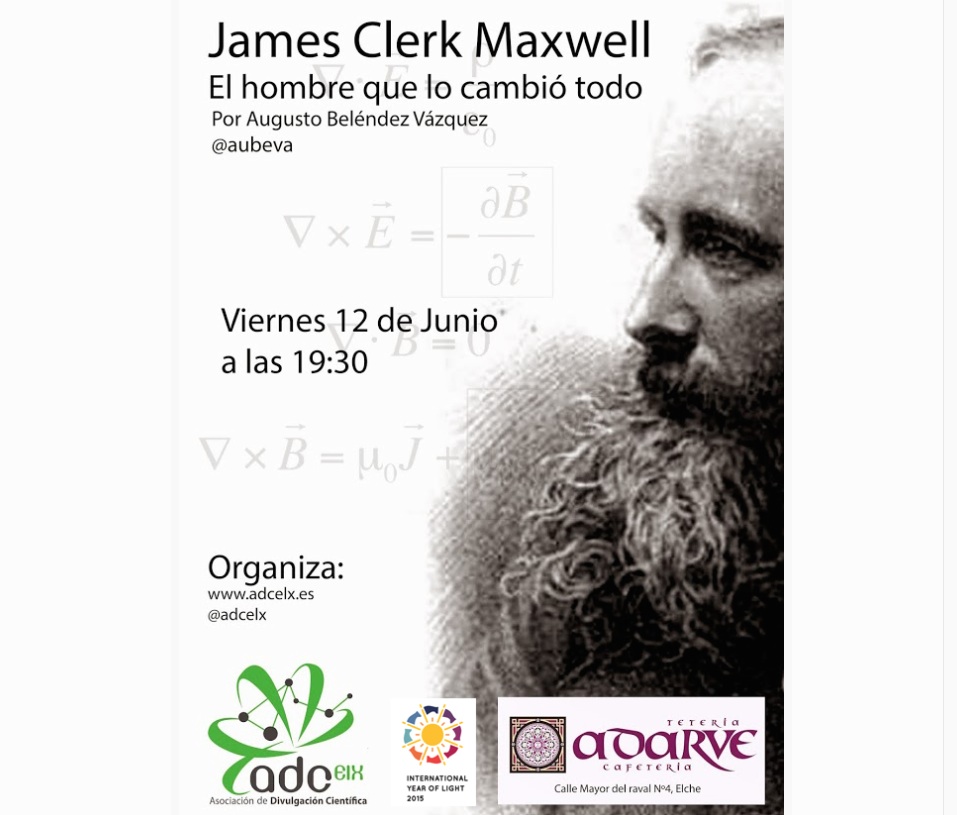
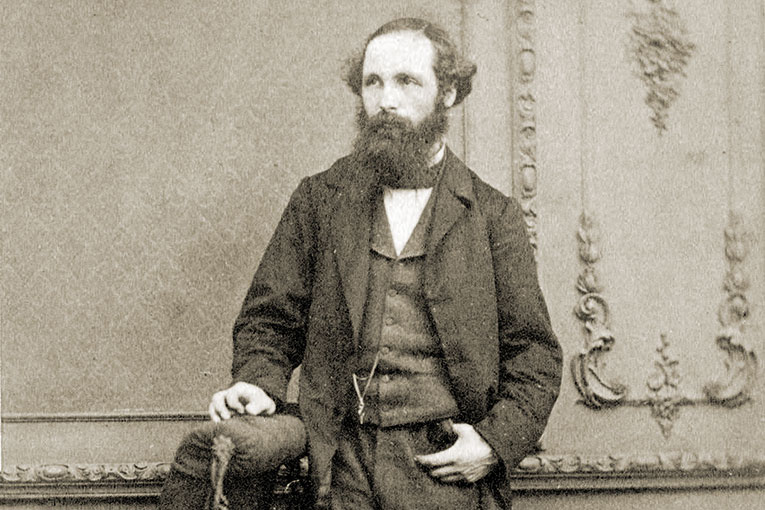
Maxwell próximo a cumplir cuarenta años /Créditos: Wikimedia Commons
.
El legado de Maxwell
Con su teoría del campo electromagnético Maxwell logró unir en un mismo marco teórico la luz, la electricidad y el magnetismo, lo que se conoce como síntesis de Maxwell. La síntesis de Maxwell marcó un hito en la historia de la unificación de las fuerzas de tal envergadura que a finales del siglo XIX muchos físicos pensaban que las leyes físicas ya estaban suficientemente comprendidas. Esta opinión condujo a la famosa afirmación del Premio Nobel de Física Albert Michelson (1852-1931) que, en la edición de 1903 de su libro «Light and their uses», señalaba:
“Ya no se realizarán más descubrimientos fundamentales; a lo sumo se perfeccionarán las determinaciones de las constantes físicas alcanzando seis o siete cifras decimales.”
Nada más lejos de la realidad.
En los primeros años del siglo XX se produjeron dos cambios trascendentales en la física con la teoría de los cuantos de Planck (1900) y la teoría de la relatividad especial de Einstein (1905) –otra vez Einstein–, ambas consecuencia de la teoría electromagnética de Maxwell, que sentó las bases para estas dos ideas revolucionarias. Es más que evidente
Maxwell abrió las puertas a la física del siglo XX
Aunque la obra de Maxwell fue majestuosa y extensa tuvo ciertas limitaciones, como la conciliación de la Mecánica de Newton y el Electromagnetismo de Maxwell, problema que fue resuelto finalmente por Einstein en 1905 con su Teoría de la Relatividad Especial. Tras los trabajos de Einstein, el éter luminífero –ese espíritu sutilísimo que se había convertido en el centro de atención de la física del siglo XIX– estaba muerto y enterrado. Las ondas electromagnéticas no necesitan de ningún medio material para su propagación.
El propio Albert Einstein reconoció que su teoría de la relatividad especial debía sus orígenes a las ecuaciones de Maxwell del campo electromagnético y en su artículo La influencia de Maxwell en la evolución de la idea de la realidad física publicado en 1931 con motivo del centenario del nacimiento de Maxwell, señaló “una época científica acabó y otra empezó con Maxwell”, “este cambio en la concepción de la realidad es el más profundo y fructífero que se ha producido en la física desde los tiempos de Newton” y finalmente Albert Einstein afirmó con rotundidad:
«El trabajo de James Clerk Maxwell cambió el mundo para siempre.»
.En febrero de este año tuve el honor de impartir en la Universidad de Alicante la conferencia “La ‘síntesis’ de Maxwell: 150 aniversario de la teoría electromagnética de la luz”, dentro de los actos programados por la Sección de Alicante de la RSEF con motivo del “Año Internacional de la Luz 2015”. Os dejo el vídeo a continuación.
BIBLIOGRAFÍA
J. Gabàs, La naturaleza de la luz: Maxwell. (Nivola Libros y Ediciones. Madrid, 2012).
F. Everitt, «James Clerk Maxwell: A force for physics», Physics World, pp. 32-37 (Diciembre 2006).
A. Beléndez, “La unificación electromagnética: 150 aniversario de las ecuaciones de Maxwell”, Mètode Nº 84, pp. 16-21, Invierno 2014/15.
J. M. Sánchez Ron, J. M. (ed.), J. C. Maxwell: Materia y movimiento (Crítica. Barcelona, 2006).
J. C. Maxwell, “A Dynamical Theory of the Electromagnetic Field”, Philosophical Transactions of the Royal Society of London, 155: 459-512 (1865).
L. Campbell and W. Garnett, The life of James Clerk Maxwell (MacMillan and co., Londres 1882)
N. Forbes and B. Mahon, Faraday, Maxwell, and the Electromagnetic Field: How two men revolutionized Physics (Prometheus Books, New York 2014).
R. Flood, M. McCartney and A. Whitaker (eds.), James Clerk Maxwell. Perspectives on his Life and Work (Oxford University Press, Oxford 2014).
A. Einstein, «Maxwell’s Influence on the Development of the Conception of Physical Reality». En J. J. Thomson, J. J. et al. James Clerk Maxwell: A Commemoration Volume 1831-1931 (University Press. Cambridge, 1931).