The calcareous nannofossils of the genus Ceratolithus, known for their horseshoe shape (referred to as ceratolith), evolved from the Orthorhabdus rugosus, a rod-shape nannolith with three rodded blades (sinistral, median, and dextral). The sinistral and median blades gave rise to the sinistral and dextral arms of the ceratolith, while the dextral blade was reduced to a keel. The first species of the Ceratolithus genus branch is Ceratolithus finifer, which rapidly evolved into Ceratolithus acutus. Around at the same time, the merging of three duplicated, delicate horseshoe-shaped structures derived from C. finifer – two equivalent and one a mirror image of the other- resulted in the short-lived Poralithus atlanticus (5.32 to 5.17 Ma). Later on, two duplicated horseshoe-shaped structures oriented at an angle of approximately 45° and fused at the horseshoe’s close side, produced Amaurolithus tricorniculatus (5.30 to 4.86 Ma). The crystallographic features of A. tricorniculatus points to a possible origin by two duplicated Ceratolithus-type horseshoes (birefringent in its stable layout) and derived from C. finifer. Being the type species of the Amaurolithus genus and also evolving from the Ceratolithus branch, then the early ‘Amaurolithus’, which evolved from O. rugosus, have been placed in a newly defined Protoamaurolithus genus, as Protoamaurolithus primus and Protoamaurolithus delicatus. Best-preserved Amaurolithus tricorniculatus specimens are observed to show birefringence and the broken and poor-preserved use to be slightly or not birefringence. Poralithus atlanticus and Amaurolithus tricorniculatus appeared instantly in the geologic record, indicative of instantaneous speciation, resulting from horseshoe-structure duplication process.
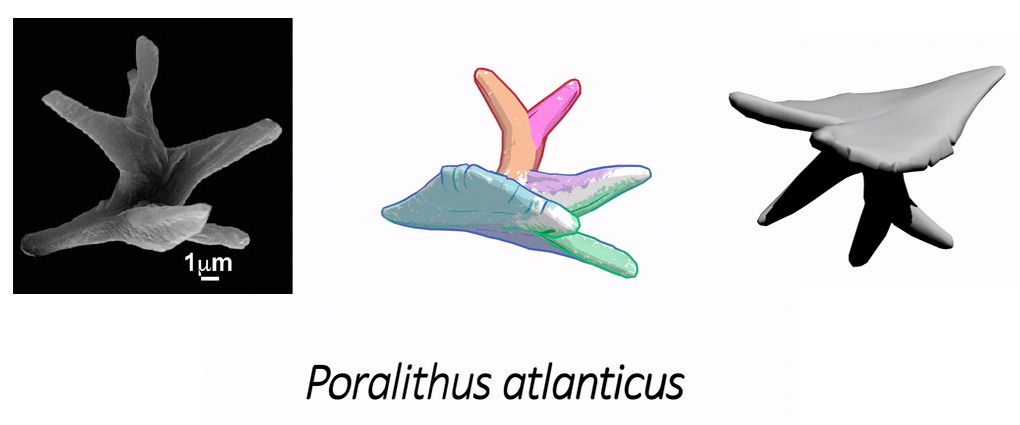
Figure. 3D recreation of Poralithus atlanticus.
Cite as: Lancis, C., Tent-Manclús, J. E., Lancis, J., Estévez, A. y Flores, J. A. (2025): Evolution of Neogene fossil ceratoliths (Coccolithophores) by duplication. Marine Micropaleontology, Volume 201, 102530.
https://doi.org/10.1016/j.marmicro.2025.102530