"Respaldar la ciencia es defender la curiosidad, la racionalidad, el sentido crítico, el descubrimiento, la constancia, la cultura …" (Año de la Ciencia 2007)
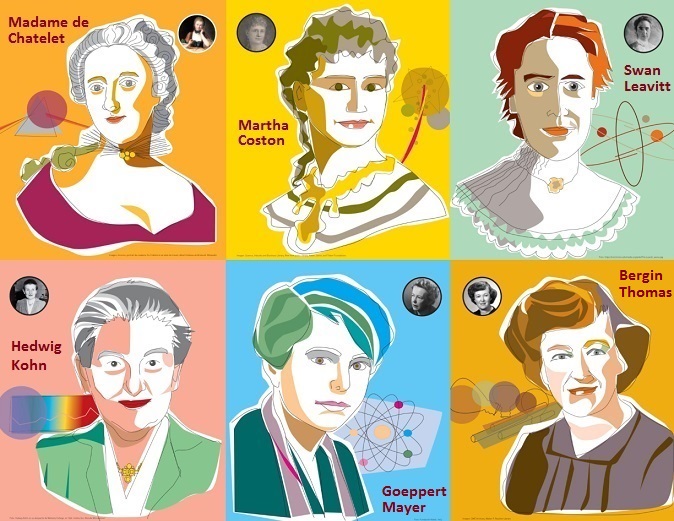
Dos de los objetivos de la declaración del año 2015 como el Año Internacional de la Luz y de las Tecnologías basadas en la Luz son “promocionar el empoderamiento de la mujer en la Ciencia” y “fomentar vocaciones científicas en el ámbito de la luz y de sus aplicaciones”. Con esas dos motivaciones, un grupo de personas pertenecientes al Grupo de Mujeres en Física de la Real Sociedad Española de Física (RSEF) y a la Sociedad Española de Óptica (SEDOPTICA) hemos estado trabajando para visibilizar investigadoras que han contribuido significativamente al desarrollo del campo científico de la luz y a ellas hemos dedicado esta Exposición. Además, es indudable que dando visibilidad a la labor de estas científicas y poniendo en valor sus aportaciones en el avance de las tecnologías ópticas y fotónicas de nuestra Sociedad, crearemos referentes para las futuras generaciones y, sobre todo, para las jóvenes estudiantes. Muchos son los hitos importantes en la historia de la ciencia de la luz que conmemoramos este año, pero detrás de todos ellos encontramos el nombre de un investigador: Alhazen, Fresnel, Maxwell, Einstein, Penzias, Wilson y Kao. Todos varones. Sin embargo, es absurdo pensar que la otra mitad de la humanidad ha estado ausente en el devenir de los descubrimientos científicos.
A lo largo de la Historia de la Ciencia ha habido mujeres valientes y brillantes que, pese a la prohibición explícita y negación continuada de su vocación, han sabido abrirse camino y nos han iluminado con sus descubrimientos sobre la luz. Es momento ahora de iluminarlas a ellas y sirva esta exposición como homenaje. Gracias a la erudición de Madame de Châtelet y a su traducción de los “Principia Mathematica” permitió que el continente europeo accediera al newtonianismo. Martha Coston fue la primera en diseñar y fabricar un sistema de comunicación basado en bengalas luminosas para los barcos contribuyendo a salvar muchas vidas. Henrietta Swan Leavitt descubrió el camino para conocer el tamaño de nuestra galaxia y la escala del universo. Hedwig Kohn realizó un minucioso trabajo en espectrometría y pirometría, hoy considerados estándares de iluminación. Maria Goppert Mayer dio nombre a la unidad de sección de absorción de dos fotones yMartha Jane Bergin Thomas mejoró las fuentes de iluminación, sobre todo bombillas y tubos fluorescentes.
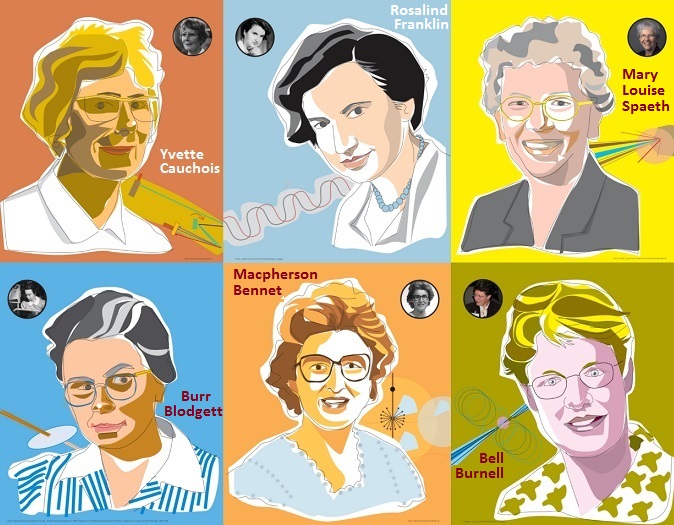
Yvette Cauchois creó un espectrógrafo de rayos X que permitió descubrir nuevos elementos del sistema periódico. Rosalind Franklin obtuvo la famosa Fotografía 51, que probó experimentalmente la estructura helicoidal del ADN mediante difracción de rayos X, mientras que Marie Luise Spaeth inventó el láser sintonizable de colorante y desarrolló los telémetros láser. Katherine Burr Blodgett inventó los cristales antirreflejantes y Jean McPherson Bennet aportó ideas originales que son un referente en el estudio de las superficies ópticas. Por último, Jocelyn Bell Burnell descubrió los “faros” del universo, los púlsares.
Ellas son solo una pequeña muestra de todas las investigadoras que han trabajado, trabajan y trabajarán en las ciencias de la luz, la óptica y las tecnologías basadas en la luz. Es nuestra obligación como sociedad científica visibilizarlas y dar a conocer sus aportaciones y aspectos ejemplares de sus vidas. Que mejor momento para hacerlo que durante este “Año Internacional de la Luz y de las Tecnologías basadas en la Luz”.
Salvador Dalí també va realitzar hologrames i va ser amic de Dennis Gabor, premi Nobel de física i inventor de l’holografia
Stephen Benton (1941-2003), un dels pioners de l’holografia, va dir en més d’una ocasió que «es la intersecció d’art, ciència i tecnologia el que fa tan interessant l’holografia». La veritat és que, juntament amb moltíssimes aplicacions científiques i tecnològiques en àmbits molt diversos, l’holografia és un dels pocs camps científics que ha proporcionat un mitjà per a l’art.
L’holografia permet produir imatges tridimensionals i consta de dues etapes: el registre i la reconstrucció. Els fonaments físics de l’holografia estan en la natura ondulatòria de la llum: el fenomen de les interferències en l’etapa de registre i el de la difracció en la de reconstrucció. En l’etapa de registre s’emmagatzema en un material de registre el diagrama interferencial d’una ona provinent d’un objecte, quan és il·luminat pel làser amb una ona de referència provinent del làser mateix. El mitjà de registre impressionat, i processat si cal, és el que constitueix l’holograma (en grec holos significa la totalitat). En l’etapa de reconstrucció s’il·lumina l’holograma amb un làser i s’obté una imatge virtual i una real de l’objecte. Així, mirant a través de l’holograma, veurem una imatge tridimensional.
Una diferència fonamental amb la fotografia és que, en comptes d’emmagatzemar la imatge bidimensional de l’objecte formada per una lent o un sistema de lents, s’emmagatzema informació suficient per a poder reconstruir l’ona de l’objecte mateix. Podem afirmar que l’holografia permet «congelar” l’ona procedent de l’objecte i, després, «posar-la una altra vegada en marxa”. Un holograma és certament una espècie de finestra amb memòria. Com a conseqüència d’això, no es perd el caràcter tridimensional dels objectes. L’observador pot moure el cap una mica i mirar al voltant per a poder veure darrere de l’objecte, de manera que els efectes de paral·laxi són evidents.
Fou l’enginyer hongarès establit a Anglaterra Dennis Gabor (1900-1979) qui, en 1947, inventà l’holografia, per la qual va rebre el premi Nobel de Física en 1971. No obstant això, la idea de Gabor no hauria passat de ser, com es diu en anglès, un white elephant, un objecte superflu i sense utilitat, si no hagueren aparegut dos personatges nous a l’escena: Yuri Denisyuk (1927-2006), a la Unió Soviètica, i, sobretot, Emmett Leith (1927-2005), als Estats Units d’Amèrica. Gràcies al làser, inventat en 1960 per Theodore Maiman (1927-2007), es disposava de llum amb la coherència necessària per a registrar hologrames de gran qualitat i s’obria la porta a nombroses aplicacions. Utilitzant un làser, Leith i Upatnieks van fer, en 1964, el primer holograma d’un objecte tridimensional (un petit tren de joguet), amb l’ajuda d’una nova tècnica que ells mateixos havien inventat: l’holograma fora d’eix. Combinant la llum del làser amb la tècnica fora d’eix, havien obert el món de l’holografia al món real dels objectes tridimensionals.
Al llarg de quasi dues dècades, de 1947 a 1964, l’holografia era un collage construït des de diferents perspectives. La visió excitant de l’holograma tridimensional de Leith i Upatnieks (1964) va reactivar de manera explosiva l’interès per l’holografia. Gràcies a aquell petit tren de joguet, centenars d’investigadors van començar a relacionar aquests tres treballs i, en els anys següents a la presentació de l’holograma del tren, es van publicar més de mil articles científics sobre el registre d’hologrames. La primera exposició d’holografia artística tindria lloc a Michigan en 1968 i la segona a Nova York en 1970. En 1971 es va fundar una escola d’holografia a San Francisco, on científics, enginyers i artistes podien aprendre la nova tècnica. Així, l’holografia es va convertir en un exemple inusual de camp científic, en el desenvolupament del quals participaven grups de procedències molt diferents.
Stephen Benton seria la peça clau en el desenvolupament de l’holografia moderna; no solament per la contribució científica, també per una destacada faceta artística. Benton sostenia que «la creativitat no pertany solament al domini de l’art, n’hi ha en totes les àrees de la nostra existència i un dels aspectes més interessants de l’holografia és la relació simbiòtica entre la ciència i l’art. En 1966 Leith i Upatnieks van fer un holograma, en col·laboració amb el fotògraf i artista Fritz Goro (1901-1968), per a la revista Life i, l’any 1968, es va publicar en la revista Leonardo l’article Holography: A New Scientific Technique of Possible Use to Artists, en què s’indicava la possibilitat d’utilitzar l’holografia com una nova forma d’art.
Tot seguit, alguns artistes s’endinsaven en l’aventura hologràfica. Una de les més importants fou l’artista britànica Margaret Benyon, que va començar en l’holografia aquell mateix any (1968). Alguns dels seus hologrames poden veure’s en la imatge. L’holografia presenta un innegable interès com a tècnica revolucionària de creació d’imatges tridimensionals; té una enorme capacitat d’atracció i fascinació. Enfront de l’espai estàtic i constant de la pintura o la fotografia, l’espai hologràfic implica el moviment de l’espectador i una variació de la imatge, amb els angles de visió diferents, en la percepció dinàmica de la imatge hologràfica.
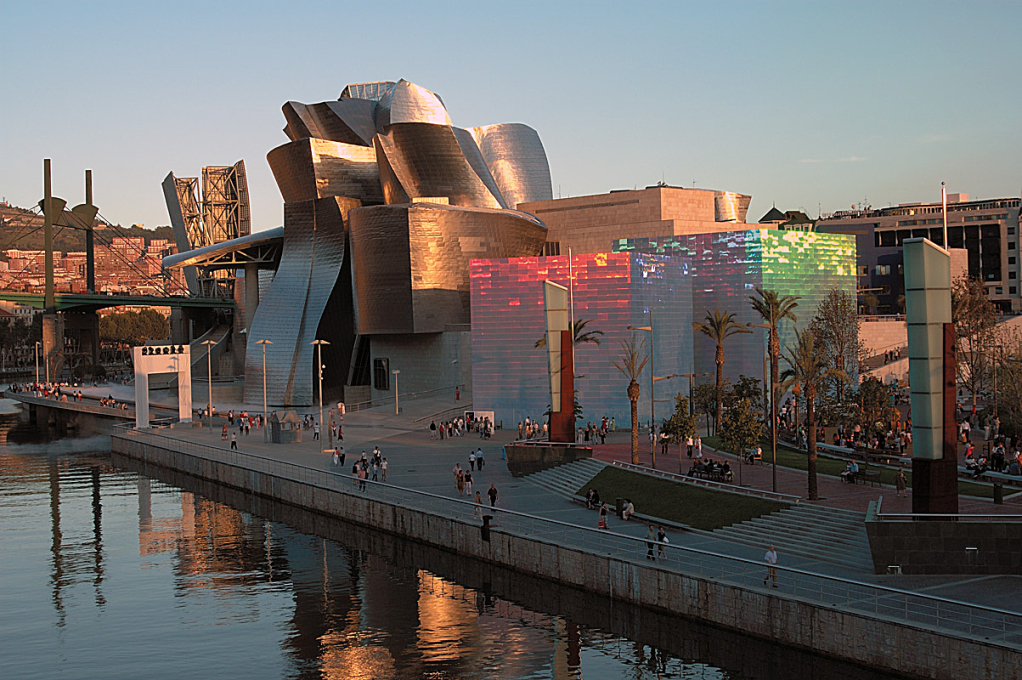
L’artista japonès Hiro Yamagata va exposar, entre 2004 i 2005, l’obra Camp quàntic-X3 a l’exterior del Museu Guggenheim de Bilbao. Es tractava de dos cubs coberts de panells hologràfics, que canviaven de color en funció de la direcció i l’angle dels rajos de sol i de la posició de l’observador.
Projecte d’instal·lació de Camp quàntic-X3 al Museu Guggenheim de Bilbao d’Hiro Yamagata. Credit: pàgina web del Guggenheim.
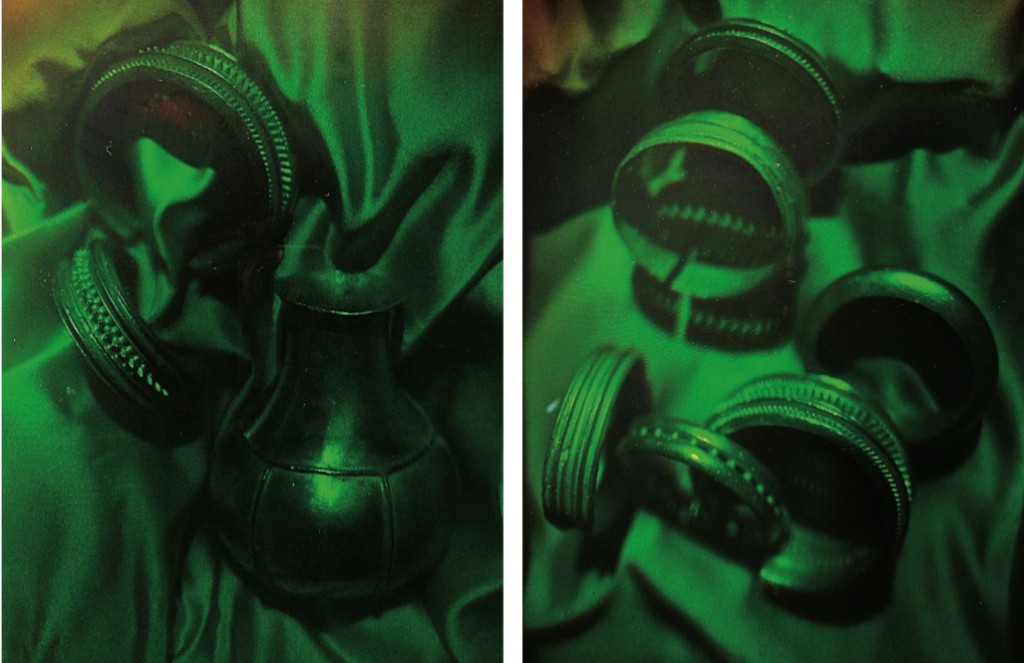
Els hologrames també s’utilitzen als museus per a substituir objectes delicats i valuosos o peces originals durant exposicions itinerants. En 1984, per exemple, es van fer a la Universitat d’Alacant una sèrie d’hologrames de reflexió sobre el Tresor de Villena i hologrames d’aquest tipus s’han utilitzat en molts països per a conservar obres d’art considerades tresors arqueològics, a través d’un vast programa de col·laboració entre físics i museòlegs. La fidelitat en la reproducció de formes, colors i lluentors és tan espectacular que és difícil distingir si el que es veu és l’objecte darrere d’una finestra de vidre o una reproducció hologràfica.
Hologramas del tesoro de Villena realizados en la Universidad de Alicante en 1984.
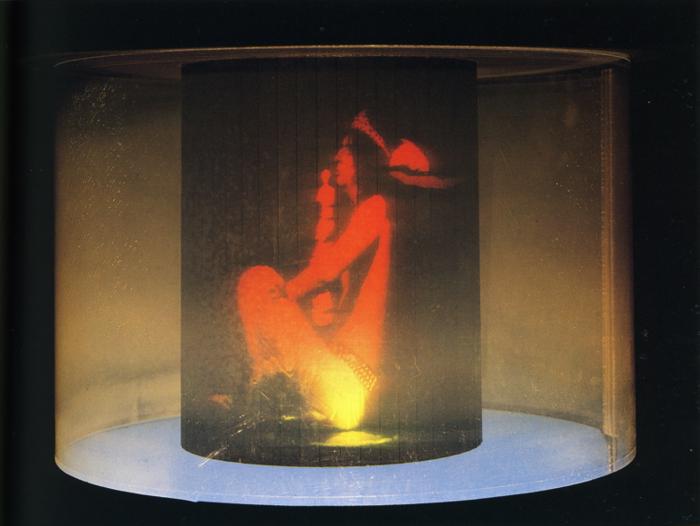
Tots sabem qui és Salvador Dalí (1904-1989), surrealista i geni excèntric que, per cert, ha aparegut recreat en un dels últims capítols de la sèrie de televisió El Ministerio del Tiempo, quan els protagonistes viatgen a l’època daurada de la Residencia de Estudiantes de Madrid en els anys 20 del segle passat. Doncs bé, potser m’equivoque, però estic quasi segur que la gran majoria de no sap que Salvador Dalí també va fer una incursió en el món de l’holografia. Entre 1971 i 1976, Salvador Dalí i l’artista sud-africà Selwyn Lyssack van col·laborar en la realització de set hologrames titulats Brain of Alice Cooper, Crystal Grotto, Dalí Painting Gala, Holos! Holos! Velázquez! Gabor!, Submarine Fisherman, Polyhedron i Melting Clock. Van comptar amb l’ajuda de Conductron Engineers, per a produir hologrames amb làsers polsants, i de Multiplex Company, per a fer estereogrames hologràfics. Dalí mateix va fer una exposició a la galeria Knoedler de Nova York en 1972 i una altra en 1973 que incloïa hologrames, a la qual va assistir el Gabor. Al gener de 2014 la revista CSPIE Professional Magazine va publicar l’article de Selwyn Lissack Dali in holographic space: A collaboration of art and science, en el qual parla de la col·laboració amb Dalí. Un dels hologrames realitzats en 1973 es titula Brain of Alice Cooper i és un estereograma hologràfic d’Alice Cooper, cantant de hard rock i heavy nascut en 1948, autèntica icona del rock.
Holograma Brain of Alice Cooper realitzat per Salvador Dalí i Selwyn Lissack en 1973.
Un altre dels hologrames concebuts per Dalí en 1975 és Melting clock. No va ser, però, fins al 2003 que Selwyn Lyssack, a partir de l’esbós original de Dalí, el va realitzar. Tant l’esbós de Dalí com l’holograma van ser subhastats l’any passat a Sotheby’s. Volien vendre el lot per una quantitat entre 100.000 i 150.000 dòlars; el preu final va ser 269.000 dòlars.
Melting clock: esbós de Dalí de 1975 i holograma realitzat per Selwyn Lyssack en 2003 que van ser subhastats en 2014. Credit: Web de la Galeria Sotheby’s.
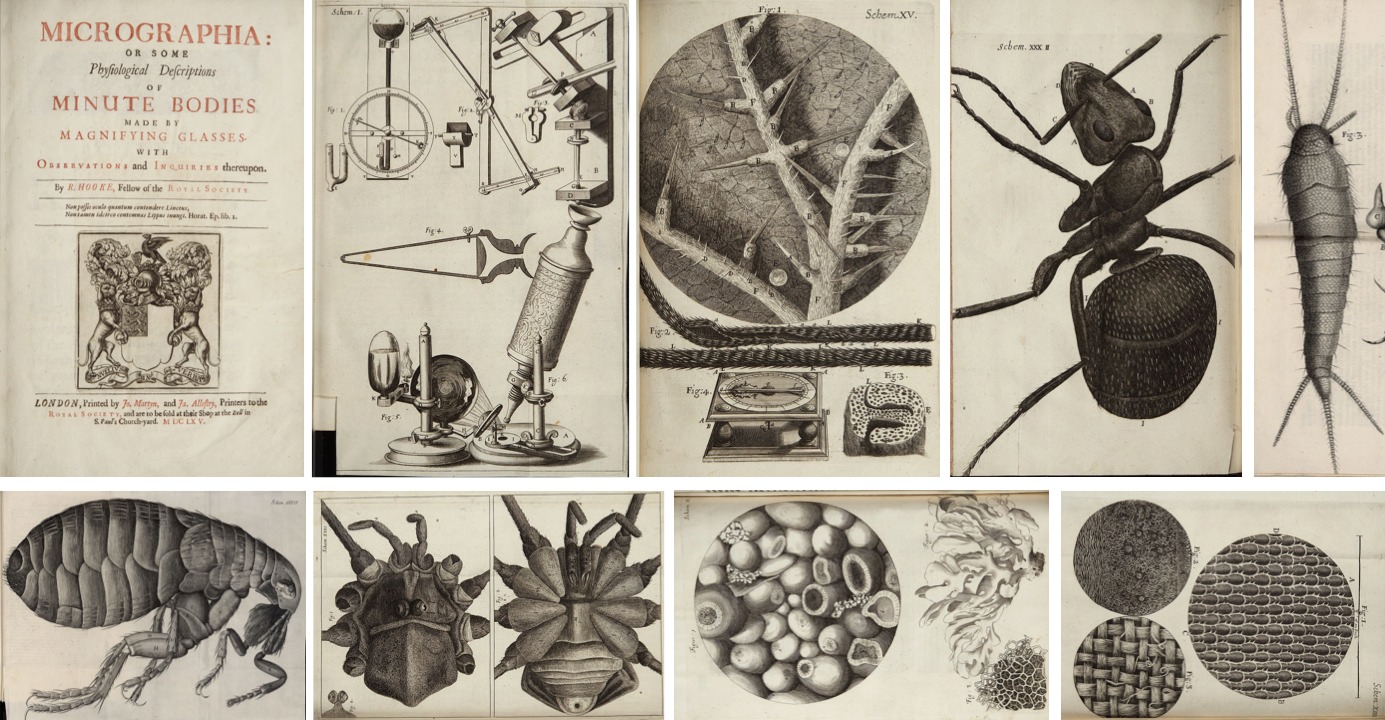
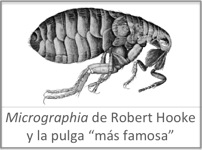
En 1665 Robert Hooke publica su libro Micrographia con dibujos de imágenes vistas a través del miscroscopio, incluido el de la «pulga» más reproducida de toda la historia
Este año 2015, declarado por la ONU como “Año Internacional de la Luz y de las Tecnologías basadas en la Luz”, se cumple el trescientos cincuenta aniversario de la publicación del libroMicrographia, escrito en 1665 por el científico inglés Robert Hooke (1635-1703), y en el que aparecen por primera vez dibujos de imágenes observadas a través de un microscopio. Aunque ya existían microscopios, no fue hasta mediados del siglo XVII cuándo éstos se utilizaron de forma extensa para la investigación científica.
Micrographia es la primera publicación importante de la Royal Society de Londres (Royal Society of London for Improving Natural Knowledge)y también se convirtió, por méritos propios, en el primer “best-seller” científico de la Historia, creando un gran interés en el público en la nueva disciplina de la Microscopía. Desde luego, se trata de uno de los primeros libros de “divulgación científica”. Uno de sus mayores atractivos era que mostraba una nueva visión desconocida y fascinante de objetos de la vida cotidiana, de los que todo el mundo creía saberlo todo, pero cuya forma cambiaba radicalmente al ser observados a través de los aumentos del microscopio. Por ejemplo, la punta de una aguja de coser parecía más un pimiento que un objeto afilado y puntiagudo, y una pulga (la imagen más reproducida de la Micrographia de Hooke) o el ojo de una mosca se convertían en grandes monstruos a través del microscopio. Todas esas imágenes tan “extrañas” y “desconcertantes” resultaban a lavez fascinantes para la población de la época.
Robert Hooke defendió en su Micrographia la importancia de la observación y la experimentación en la investigación científica de la naturaleza. En aquella época la escuela empirista inglesa, en contraste con la escuela francesa, se caracterizaba por su énfasis en la observación y el experimento y tenía su vertiente filosófica en las obras de John Locke, David Hume o Francis Bacon. Hooke incluye también en su libro comentarios y conjeturas acerca de impresionantes observaciones biológicas microscópicas de especímenes que van desde las plantas hasta las pulgas. La obra también trata de planetas, de la teoría ondulatoria de la luz y del origen de los fósiles. Es evidente que estimuló a los científicos de la época sobre las posibilidades del microscopio en la investigación científica. Hooke fue el descubridor de las células y precisamente fue él quien acuñó el término célula para describir la unidad básica de todos los seres vivos. El vocablo provenía de sus observaciones de células vegetales, que le recordaban la «cellula» o celdas donde vivían los monjes.
El libro contiene la descripción detallada de cincuenta y siete observaciones realizadas con el microscopio compuesto que el propio Hooke fabricó, y tres observaciones telescópicas. Fue recibida con entusiasmo por parte de la comunidad científica europea. La obra fue un regalo de la Royal Society de Londres para fascinar al monarca Carlos II de Inglaterra, durante cuyo reinado esta Sociedad fue sancionada por cédula Real en 1662, lo que permitió que la Royal Society no fuera una institución efímera dependiente de un mecenas (como sucedió con sociedades científicas de otros países), sino una corporación de ámbito nacional para promover la investigación científica.
En su Micrographia, Robert Hooke declara:
“By the help of Microscopes, there is nothing so small, as to escape our inquiring; hence there is a new visable World discovered to the understanding.”
La obra recoge observaciones de todo tipo de objetos cotidianos, estudiados de manera no sistemática, y ordenados según un criterio de complejidad creciente, desde los objetos más simples a los más complejos.
Observaciones sobre objetos artificiales.
Observaciones sobre elementos inertes, destacando las descripciones del hielo y la nieve.
Observaciones del mundo vegetal como la descripción del corcho, los fósiles y el carbón vegetal.
Observaciones sobre el reino animal con 26 descripciones de animales y partes de animales, como las pulgas o el ojo compuesto de la mosca.
Tres observaciones telescópicas.
Observaciones clínicas en los animales.
Observaciones sobre lo que Hooke denomina el “reino de los hongos”, entren los que se encuentran los mohos las levaduras y las setas.
En el siguiente enlace puede accederse al audio de la conferencia “A new visible world: Robert Hooke’s Micrographia” impartida en la Royal Society de Londres el 17 de octubre de 2015 por la Dra. Felicity Henderson:
Robert Hooke es considerado uno de los científicos experimentales más importantes de la historia de la ciencia. Nació en la Isla de Wight, estudió en Oxford, fue profesor de geometría del Gresham College, inspector municipal en la reconstrucción de Londres, arquitecto, doctor honorario de medicina, autor de numerosos trabajos, inventor y destacado constructor de instrumentos, lo que le ha valido el sobrenombre de “el Leonardo de Londres”. Durante un tiempo fue ayudante de Robert Boyle (1627-1691). Sus intereses abarcaron campos científicos tan dispares como la biología, la medicina, la horología (cronometría), la física planetaria, la mecánica de sólidos deformables, la microscopía, la náutica y la arquitectura. Participó en la creación en 1660 de la primera sociedad científica de la historia, la Royal Society de Londres. Los miembros de la Royal Society tenían reuniones regulares, se trabajaba, se escribía copiosamente y, algunas veces, habían fructíferas controversias. Sus polémicas con Newton acerca de la teoría de los colores de Newton, así como sobre la prioridad en el descubrimiento de la ley de la gravitación universal han pasado a formar parte de la historia de la ciencia. Newton y Hooke pronto se convirtieron en “enemigos irreconciliables”, lo que dio lugar a que Hooke tuviera una amarga relación con Newton.
En 1662 Robert Hooke fue nombrado curator o encargado de los experimentos de la Royal Society Londres y se le asignó un salario, y llegó a ser también secretario de esta Sociedad en 1677. La tarea de Hooke como curator era organizar, bajo la dirección del Consejo, un programa de experimentos y observaciones para las reuniones, así como examinar los trabajos enviados por los miembros de la Sociedad (algo así como un referee de las actuales revistas científicas). Precisamente su Micrographia es, en parte, resultado de su tarea de curator. Pese al prestigio que alcanzó en el ámbito de la ciencia, sus restos yacen en una tumba desconocida, en algún punto del norte de Londres. En los últimos años, algunos historiadores y científicos han puesto gran empeño en reivindicar a este “genio olvidado”, por usar las palabras de uno de sus biógrafos, Stephen Inwood.
No existen retratos autenticados de Robert Hooke, algo atribuido muchas veces al odio entre Robert Hooke e Isaac Newton. En tiempos de Hooke, la Royal Society se reunía en el Gresham College, pero a los pocos meses de la muerte de Hooke, Newton se convirtió en presidente de la Sociedad y se trazaron planes para un nuevo punto de encuentro. Cuando se hizo el cambio de ubicación unos pocos años más tarde, en 1710, el retrato de Hooke de la Royal Society desapareció, y aún no se ha encontrado. Todos apuntan a Newton como el responsable de esta desaparición, pues estaba Newton se propuso borrar toda huella no solo de las contribuciones científicas sino también de la existencia del que había sido su rival.
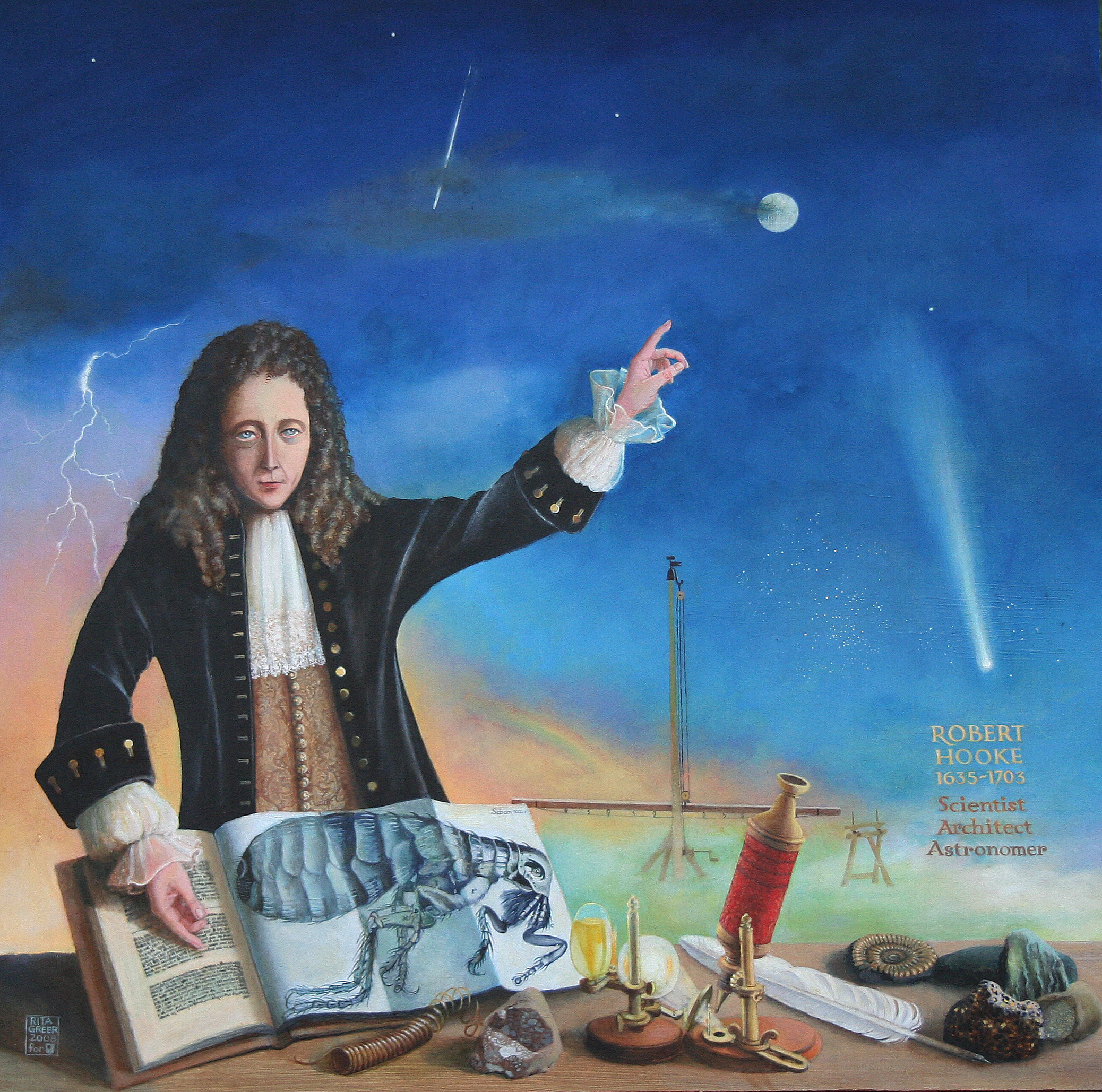
En 2003, la pintora de historia Rita Greer se embarcó en un proyecto autofinanciado en memoria de Hooke, “The Rita Greer Robert Hooke Project”, destinado a producir imágenes creíbles de él, tanto pintadas como dibujadas, adaptando descripciones contemporáneas a Hooke procedentes de dos fuentes: John Aubrey y Richard Tapia. Las imágenes realizadas por Rita Greer de Hooke, se han utilizado en programas de televisión en el Reino Unido y EE.UU., así como en libros y revistas.
Javier Maravall en su excelente contribución sobre Hooke publicada en Naukas dice de él que:
No podemos sino proclamar fuertemente su grandísimo genio y sus monumentales aportaciones a la Ciencia moderna
El diarista inglés Samuel Pepys (1633-1703) describió la Micrographia de Robert Hooke como:
El libro más ingenioso que he leído.
El historiador de la cienciaRichard Westfall(1924-1996) escribió:
Micrographia, de Robert Hooke, sigue siendo una de las obras maestras de la ciencia del siglo XVII porque presenta un ramillete de observaciones que recorren los reinos animal, vegetal y mineral.
En el retrato que se puede ver en la imagen, realizado por Rita Greer, se muestra a Robert Hooke sosteniendo un ejemplar de su Micrographia abierto por la página donde aparece la imagen de la pulga, junto a un microscopio, una pluma y unos fósiles. El muelle en espiral representa uno de los éxitos que han definido a Hooke: la ley de la elasticidad.
.
BIBLIOGRAFÍA
C. A. Pickover, El libro de la Física (Editorial Librero, 2011).
J. Ordóñez, V. Navarro, J. M. Sánchez Ron, Historia de la Ciencia (Espasa Calpe, Madrid, 2007).
A. Udías, Historia de la Física: De Arquímedes a Einstein (Síntesis, Madrid, 2004).
G. Holton y S. G. Brush, Introducción a los conceptos y teorías de las Ciencias Físicas (Reverté, Barcelona, 1988).
El Proyecto Manhattan fue una reacción estadounidense a la creencia de que los físicos alemanes estaban desarrollando la bomba atómica. El Premio Nobel de Física alemán tuvo un papel controvertido y, a veces, poco claro en esta historia
A finales del siglo XIX y comienzos del XX, Alemania era una potencia mundial en el campo de la Física; sin embargo, cuando Hitler comenzó a perseguir a los judíos, muchos de los científicos que habían hecho brillar a Alemania, que eran de origen judío, decidieron exiliarse y marcharon fundamentalmente a Estados Unidos.
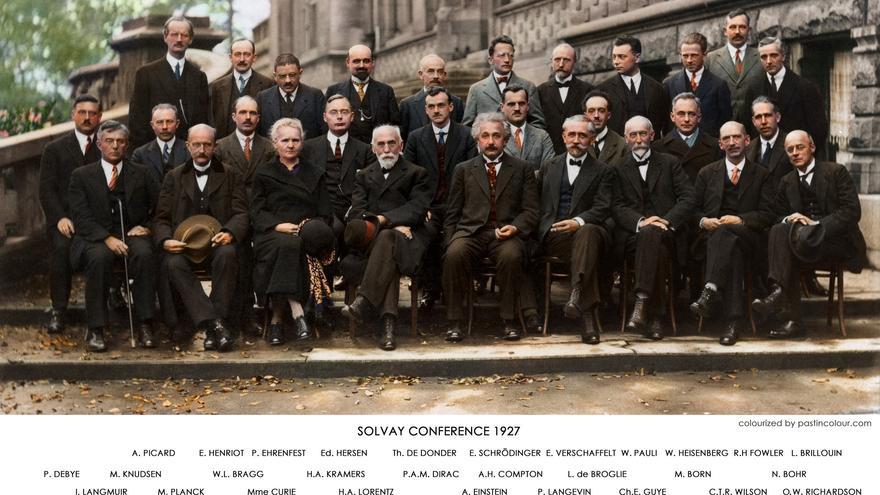
Pero otros físicos eran considerados totalmente «arios» según la doctrina nazi. Uno de ellos, Werner Karl Heisenberg, nacido a finales del primer año del siglo XX en la ciudad bávara de Wurzburgo. A Heisenberg le fue concedido el Premio Nobel de Física del año 1932 (era muy joven, aún no había cumplido 31 años) por sus contribuciones fundamentales a la nueva Física Atómica que estaba surgiendo y utilizando para ello la Mecánica Cuántica como herramienta. Esa nueva Mecánica no sólo estaba cambiando nuestra forma de entender el mundo atómico y subatómico, sino también produciendo un cambio de paradigma en nuestro conocimiento del mundo que nos rodea, siendo imposible medir la posición y la velocidad de una partícula elemental con total exactitud: El «principio de incertidumbre» de Heisenberg. Cualquier proceso de medida modifica la magnitud que se desea medir. En el mundo microscópico debemos abandonar el concepto de causalidad, pasando del determinismo clásico a una interpretación probabilística.