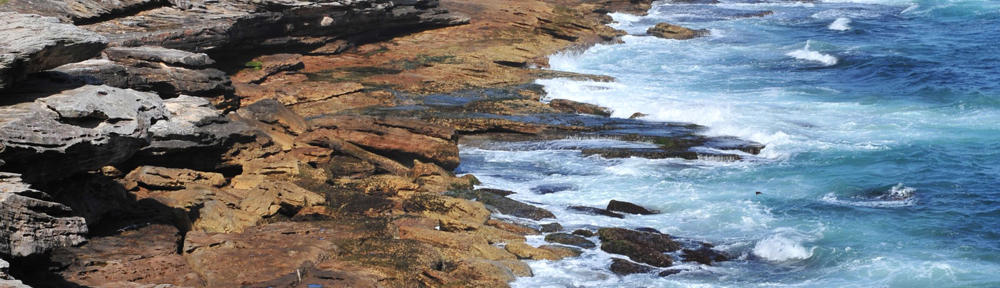
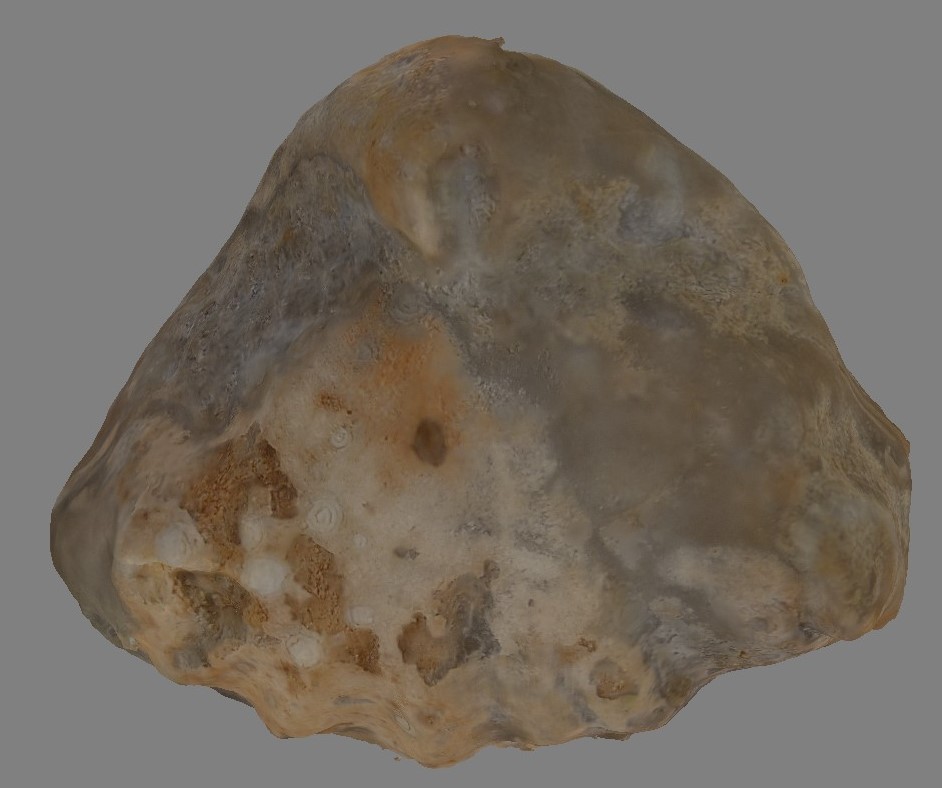
Multicostate terebratulides (Brachiopoda, Early Jurassic) in the westernmost Tethys Ocean

Hesperithyris aff. sinuosa from the Marrajo (Murcia) Subbetic Range.

 Early Jurassic multicostate Terebratulida are substantiated in the Subbetic Domain and reported in the Iberian Range for the first time. Records of this clade are revised in the peri-Iberian platforms (Subbetic, Iberian Range, Gibraltar, North and NE Spain, Lusitanian basin) in order to evaluate their global pattern distribution across the Tethys Ocean. After a new tectonosedimentary analysis, marine swells are proposed as depositional scenarios for the assemblages containing Hesperithyris  aff. sinuosa  in the southernmost Subbetic paleomargin, sheding light to the intrincate paleogeography of this part from the Betic Range. In the Iberian Range, the same species and Merophricus ? fimbrioides  occurred in extensive flooding intervals arriving from the deepest marine populations. As results of taxonomic and paleobiogeographical analyses, two morphotypes, Merophricus – and Hesperithyris -type, are discriminated forming part of the westernmost Tethys migration route. It can be ascertained that their E-W Tethyan spreading was fulfilled for the Merophricus -type from the intra-Mediterranean basins to the westernmost arc of the Tethys Ocean, via the Betic–Gibraltar seaway, reaching the proto-Atlantic northwards (Lusitanian basin) and possibly the northern margin of the Iberian Massif and Western France. In contrast, Hesperithyris  aff. sinuosa  from the Iberian and Betic ranges correspond to the intra- and peri-Mediterranean Hesperithyris– type, with a different dispersal pattern. The only Lower Jurassic Hesperithyrys -type multicostate terebratulides reported in the boundaries of the NW-Boreal bioprovince derive from the Northeastern Iberian paleomargins, probably due to sporadic incursion events at transgressive episodes. The row of Subbetic epioceanic seamount stepping stones helped the Merophricus -type migration in the E-W Mediterranean route and their pivotal position facilitated the dispersal of both morphotypes via the epicontinental Iberian seaway. In the Subbetic, the Hesperithyris bearing assemblages are recorded in the Pliensbachian Lavinianum Zone (Portisi and Cornacaldense subzones) equivalent to the basal part of the Margaritatus Zone (Stokesi Subzone) from the Iberian Range where the same species is now recorded, thus correlating the Southern epioceanic paleomargins with the Eastern epicontinental platforms. The origin and dispersal of the Merophricus -type around the Si–Pl boundary concurred with the Western Tethys early pre-rifting stage, and the pre-Domerian drowning of Tethyan platforms is synchronically consistent with the origin and spreading of the Hesperithyris -type.
Cite as: Baeza-Carratalá, J. F., García Joral, F., and Tent-Manclús, J. E. (2025). Multicostate terebratulides (Brachiopoda, Early Jurassic) from the South and Eastern peri-Iberian paleomargins: paleobiogeographical and biostratigraphical perspectives in the westernmost Tethys Ocean. Journal of Iberian Geology, 28 p. https://doi.org/10.1007/s41513-025-00296-8

Koudiat El Madene unit (Kabylian “Dorsal”, Algeria) and its correlation

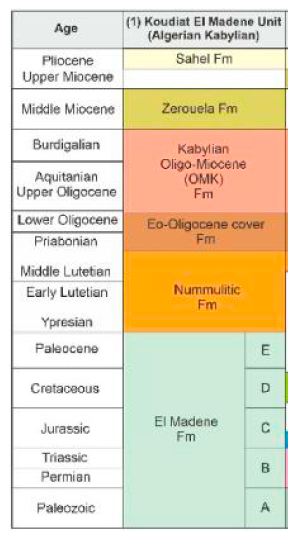
The Koudiat El Madene Unit (Arba Massif) belongs to the Kabylian “Dorsal” (Algerian Internal Zone). The stratigraphy and tectonic structuring of the area is equivalent to the western Moroccan Internal Rif and its counterpart in the Spanish Internal Betic Cordillera. In fact, all these chain segments are due to a common Cenozoic geodynamic evolution related to the closure of the westernmost Tethys and the later opening of the Mediterranean Sea. Nevertheless, a comparison of the Kabylian internal units at the western Mediterranean scale was still missing. This study means a revisiting of the outcrops of the Koudiat El Madene Unit and a revision of the existent literature on the area aimed to a comparation of this area with the Algerian Kabylian “Dorsal” and with the Ghomaride (Moroccan Rif) and Malaguide (Spanish Betic Cordillera) equivalents units. This unit crops out in a tectonic window under different backthrusting units of the Maghrebian Flysch Basin Zone and overthrusts southwards the Maghrebian Flysch Basin Zone itself and the External Tellian Zones. This is a frequent tectonic situation of this kind of units in the internal Rif-Betic chains. The condensed succession of the Koudiat El Madene Unit, separated by unconformities but also by internal erosive boundaries, is divided into five stratigraphic formations. Nowadays, the stratigraphic division and dating of the Koudiat El Madene Unit (Algerian Kabyle Unit) are less detailed than its equivalents in the Ghomarides, especially those of the Malaguides. Nevertheless, a correlation with the Ghomaride Units from the Tetouan-Chaouen area (Northern Morocco) and the Malaguide Complex from the Sierra Espuña area (Southeastern Spain) has been performed revealing great similarities. The good correlation can be due to a close paleogeographic position in the southern margin of the Paleo- and Mesomediterranean Microplate. Minor variations should be proposed in relation to the position in the margin. Detailed and modern stratigraphic and sedimentological studies are required to propose a more precise paleogeographic framework.


Koudiat El Madene Unit (Algerian Kabylian),

cite as: Talmat, S., Martín-Martín, M., Benyoucef, M., Ferré, B., Belhai, D., 2025. The Koudiat El Madene unit (Kabylian “Dorsal”, Algeria) and its correlation with similar units belonging to the Rif-Betic Arc (Morocco and Spain). J. African Earth Sci. 223, 105515. https://doi.org/https://doi.org/10.1016/j.jafrearsci.2024.105515

History of western Tethys Ocean and the birth of the circum-mediterranean orogeny

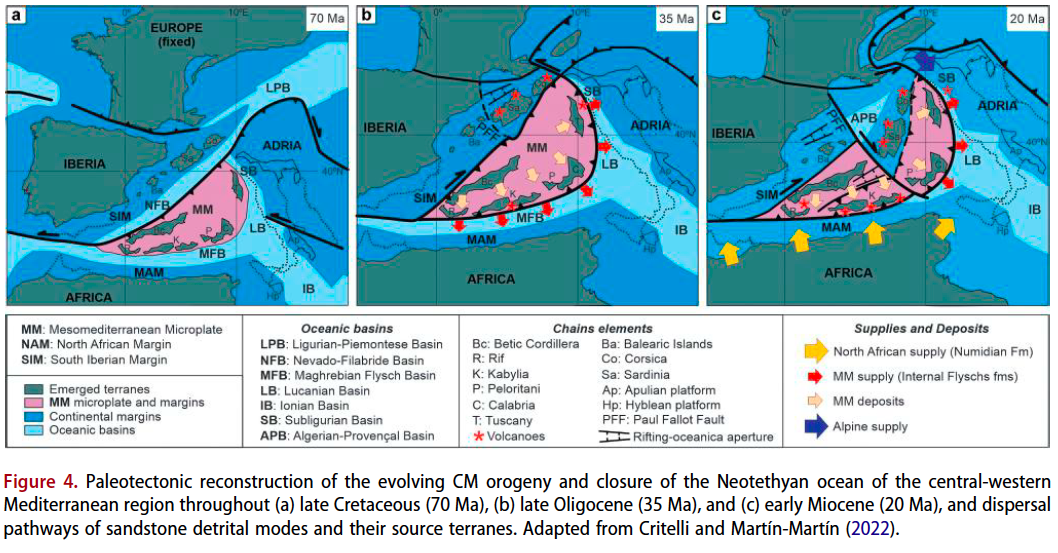
A broad region of Mesozoic to Cenozoic tectonism along the western and central Circum- Mediterranean (CM) margins, from southern Spain (Betic Cordillera) to the northern Morocco (Rif) and Italy (Apennines), includes huge volumes of sedimentary record since the Late Paleozoic. These sediments are contemporaneous and related with the fragmentation of the Pangean supercontinent due to the rifting and progressive closure, as well as the following birth of the CM orogeny. The composition and stratigraphic relations of clastics in diverse sedimentary basins of the CM region reflect a complete record of provenance relations related to the progressive destruction of the Neotethyan Ocean and plate convergence between the two major plates of Europe and Africa, and Iberia, Adria and Mesomediterranean microplates located between them. The changing nature of clastic wedges reflects the provenance relations from different source rocks involving obduction of the oceanic lithosphere, the uplifted Alpine-Mediterranean Chains, and the accreted previously deformed Mesomediterranean Microplate (AlKaPeCa), as well local neovolcanic sources, within the spatial and temporal evolving geo-puzzle terranes of the CM orogeny. The provenance evolution of sediment provides insights into how plate convergence and continental collision direct the sediment dispersal pathway in Cenozoic basins due to closure of eastern and southern Alpine-Tethyan remnant ocean basins and to the dual dispersal pathways from the previously born Alps and the nascent AlKaPeCa at the expenses of the previously deformed Mesomediterranean terranes. The source-to-sink relations testify episodic deformation events, diachronous Tethyan basin development, differentiate sediment provenance from exhumed and uplifted Alpine and CM orogens, and palaeogeographic rearrangement of crustal blocks along the nascent Mediterranean region.

cite as:  Salvatore Critelli & Manuel Martín-Martín (2023). History of western Tethys Ocean and the birth of the circum-mediterranean orogeny as reflected by source-to-sink relations, International Geology Review, DOI: 10.1080/00206814.2023.2280787